Picture a small engineering firm that has done the same work for a decade, priced its bid below every competitor, and written the strongest technical approach in the stack. Weeks after the deadline, the debrief arrives: the proposal was never scored at all. An amendment to the solicitation had gone unacknowledged, one required form was missing, and the evaluators — bound by their own rules — set the whole submission aside unread.
Their work was never the problem. Their paperwork was: the proposal answered the solicitation they remembered, not the one the government was required to judge. That gap, between a strong proposal and a compliant one, is where bids go to die. This guide walks through the gates in plain language, and names the failures evaluators catch first.

The red team reads your proposal the way the evaluators will: requirement by requirement, pen in hand, before the deadline makes it permanent.
What an RFP actually asks of you
A federal solicitation is not a suggestion list. It is the only scorecard the evaluators are allowed to use. The Federal Acquisition Regulation (FAR) states it plainly: an agency "shall evaluate competitive proposals and then assess their relative qualities solely on the factors and subfactors specified in the solicitation." That is FAR 15.305, and it cuts both ways. Brilliance the solicitation did not ask for earns no points; a requirement the solicitation did ask for, answered weakly or not at all, is recorded as a deficiency or a significant weakness in the contract file.
The instructions themselves are just as binding. FAR 52.215-1, the standard "Instructions to Offerors" provision, spells out what a compliant submission looks like — what the first page must show, how amendments must be acknowledged, when a proposal is late. And it contains a sentence every bidder should tape to the wall: the government intends to award without discussions, so "the offeror's initial proposal should contain the offeror's best terms from a cost or price and technical standpoint." There may never be a second draft. The one you submit is the one that is judged.
The gate before the score
Most bidders imagine a panel reading every proposal and ranking them. In practice, scoring is the second step. The first is a gate — a pass/fail compliance check that happens before anyone weighs your ideas:
- Was it on time? Under FAR 15.208, a proposal received after the exact time specified "is 'late' and will not be considered," outside a few narrow exceptions. Minutes count.
- Is the bidder registered? FAR 52.204-7 requires an offeror to be registered in the System for Award Management (SAM) when submitting an offer and again at the time of award. Registration and renewal live at SAM.gov, and a lapsed record is a self-inflicted elimination.
- Does it follow the instructions? Acknowledged amendments, required forms, page limits, format, the signed first page — the technicalities in Section L of the solicitation are requirements, not formatting advice.
Fail the gate and the merits never happen. Pass it, and only then does the scoring start.
The failure modes evaluators catch first
- Late by minutes. Upload portals stall, time zones get misread, a courier runs behind. FAR 15.208 does not grade on effort: late is late, and unconsidered late proposals are held unopened. (FAR 15.208)
- The unacknowledged amendment. Solicitations change while you write. FAR 52.215-1 requires offerors to acknowledge receipt of every amendment — miss one, and you have answered a requirement set that no longer exists. (FAR 52.215-1(b))
- A requirement answered in the wrong place. You addressed it — in the wrong volume, under the wrong heading, in a format Section L never asked for. Evaluators score against the factors in the solicitation (FAR 15.305); an answer they cannot find is an answer that scores zero.
- Ambiguous answers. "We will comply" is not a plan. Responses that restate the requirement, hedge on who does the work, or leave "shall" statements floating without an owner, a method, and a timeline read as risk — and risk is documented as weakness. (FAR 15.305(a))
- Claims with no proof attached. Evaluators record strengths only where a proposal demonstrates them. A résumé claim with no project, a capability with no contract number, a metric with no source: each is an unscored claim, and the gap between claim and evidence is where significant weaknesses are born. (FAR 15.305(a))
- A lapsed or mismatched SAM registration. The unique entity identifier on your cover page must match an active SAM record for the same legal entity. Different name, expired registration, wrong address — a five-minute check that ends procurements. (FAR 52.204-7)
- Pricing that trips a rule. A materially unbalanced bid — line items significantly overstated or understated against the total — can be rejected outright as an unacceptable risk to the government. (FAR 52.215-1(f)(8))
- Past performance with no relevance story. Evaluators weigh the currency and relevance of your record, not its length. Ten impressive contracts that never explain their similarity to this requirement score worse than three that do. (FAR 15.305(a)(2))
How RedTeamRFP runs the red team first
Military planners red-team their own plans before an enemy can. RedTeamRFP does the same to a proposal: an evaluator-grade audit of your RFP response, run while there is still time to fix what it finds. Every requirement in the solicitation is extracted and matched, requirement by requirement, against your response. The result is an explainable 0–100 disqualification risk score from a proprietary model — explainable matters: the score is never a black box, and the gap analysis behind it names the misses, ambiguities, and technicalities one by one, so each point of risk points at a page you can fix.
Your report comes back as a PDF, gated by a 24-hour job-scoped token issued for your audit job, and your files are never used for model training. Pricing is flat and public: $99 for a single audit, $249 for a 3-pack, and $499 per month for Team. A complete sample audit, in the exact format your proposal would receive, is published on the product page — read ours before you trust anyone's, including ours.
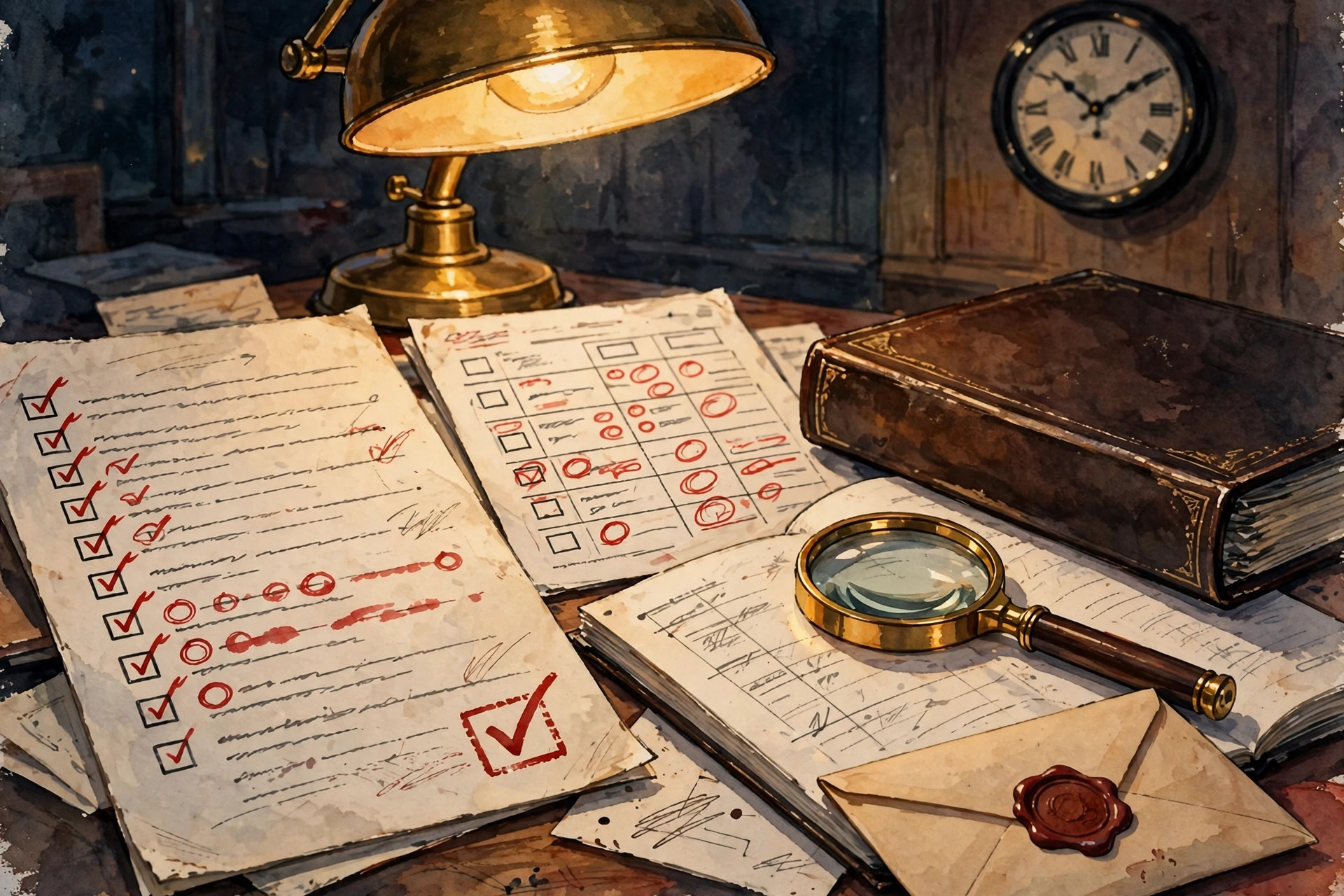
The evaluator's desk: every line checked against the solicitation, every gap circled — the audit runs this pass before the government does.
See how your proposal scores — RedTeamRFP Read a sample audit (PDF)
Why this matters beyond one proposal
Writing a serious proposal costs a small business real money — staff weeks, consultant fees, opportunity cost — and that investment is destroyed just as completely by a missing form as by a weak idea. The protest record shows how unforgiving the system is in both directions. The Government Accountability Office's Bid Protest Annual Report for Fiscal Year 2025 (GAO-26-900695) counted 1,617 protests filed in a single year; of protests decided on the merits, GAO sustained 14 percent, and "unreasonable rejection of proposal" was among the three most prevalent grounds — meaning even the government's own gatekeeping gets overturned when it is not anchored in the solicitation. Rules this strict reward exactly one habit: checking your proposal against the solicitation's own words before the government does.
RedTeamRFP: will your proposal survive? Every requirement checked, disqualification risks scored and explained — before the evaluators see it.
Honest limits
RedTeamRFP is not a law firm, a capture consultancy, or a guarantee of award — the government evaluates, and its judgment is final. This article is general information about federal proposals, not legal or procurement advice for a specific bid; state, local, and commercial RFPs run on their own rules, though the compliance habits travel well. What a red-team audit can do is ensure your proposal is judged on the strength of your work, not on an unacknowledged amendment.
Keep going
- The other evidence game. Some careers are judged the same way proposals are — claim by claim, against written criteria. Our first field guide, EB-1A Evidence Gaps USCIS Notices First, walks the ten extraordinary-ability criteria and the documentation gaps that sink strong petitions.
- Getting your organization ready to adopt AI? Our AI Readiness Audit checks workflows, governance, and staff readiness before you buy any AI tool — the same discipline, applied before a purchase instead of a submission.
- Compiling an evidence dossier of your own? DossierIQ maps a professional's record to the exact criteria an adjudicator must check, and flags every gap before filing.